Your Part Just Went Obsolete: A Step-by-Step Rescue Plan
A key IC goes end-of-life just before production. Follow one engineer as she sorts alternates, compares datasheets, proves a replacement on real boards and stops it happening again.
Microplacer team · 15 November 2026 · 5 min read
 Components
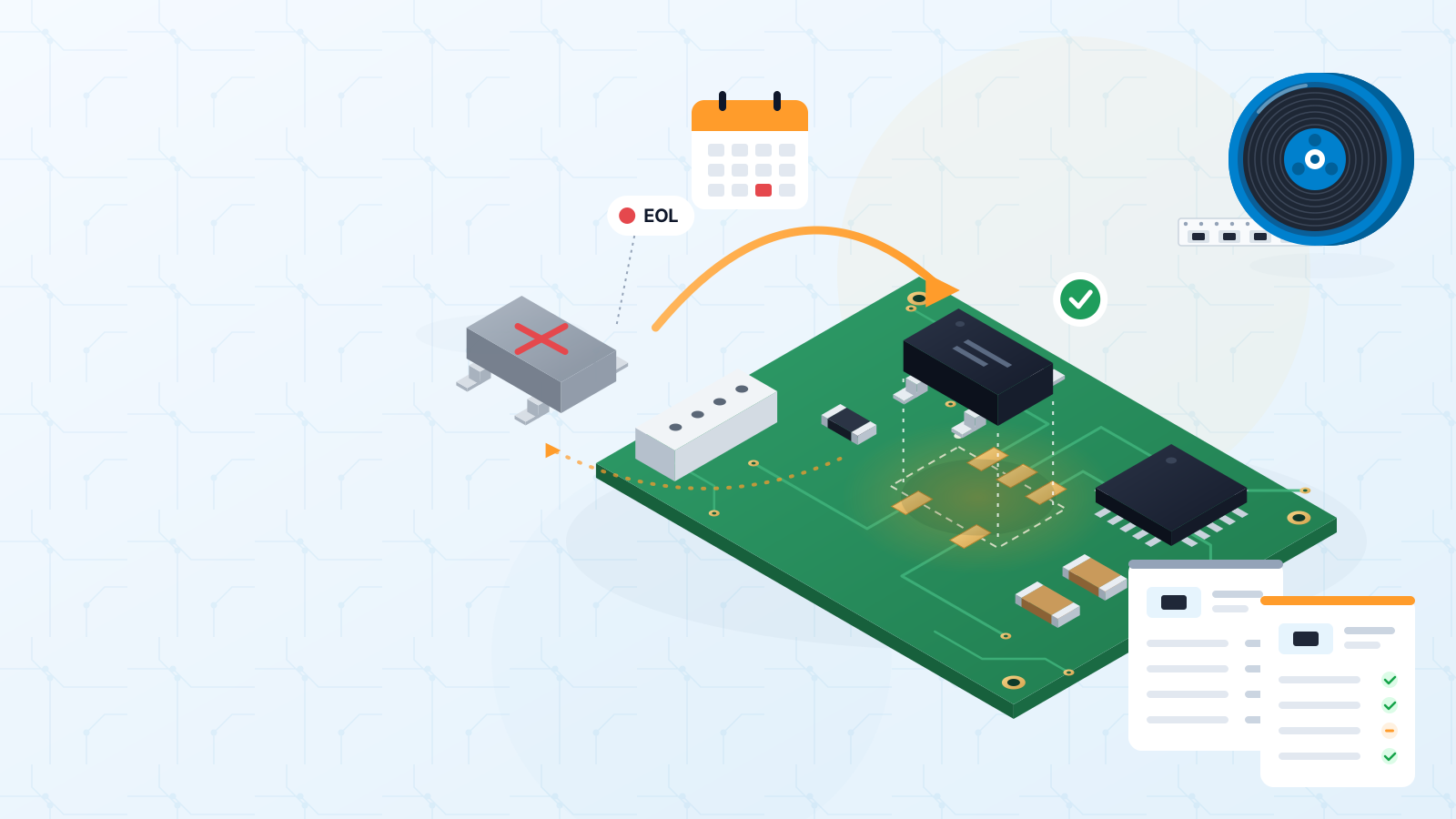
The prototype works, the enclosure fits and the first production run is planned. Then an email arrives: the main IC on your board has been marked end-of-life. It is one of the most stressful moments in hardware, but with a calm, step-by-step plan it is a problem you can solve without throwing the design away.
The scenario: an EOL notice before a production run
Picture Priya, a hardware engineer at a small Pune start-up building a battery-powered data logger. Her board uses a low-dropout voltage regulator chosen early in the project. Two weeks before the first batch of 100 boards, a distributor page shows the regulator as "EOL announced" with a last-time buy date. A product change notification (PCN) from the manufacturer confirms it.
Her first instinct is to panic-buy every remaining unit. That can be part of the answer, but not all of it. A last-time buy covers only the quantity you can predict and afford; the product will hopefully live longer than that stock. So Priya does two things at once: secures enough parts for the near-term builds, and starts looking for a replacement.
Drop-in vs pin-compatible vs redesign alternates
Not every replacement is equal. It helps to sort candidates into three groups before comparing details.
| Type | What it means | Board change needed |
|---|---|---|
| Drop-in | Same package, same pin-out, equivalent electrical specs. Often the same part from another maker. | None — only the BOM changes. |
| Pin-compatible | Fits the same footprint, but some specs or support parts differ (for example a different output capacitor). | Maybe a value change on nearby passives. |
| Redesign | Different package, pin-out or behaviour. The best part electrically, but it does not fit. | New layout revision and new Gerbers. |
Priya found no true drop-in, but two pin-compatible regulators in the same SOT-23-5 package. A redesign stayed on the list as plan C.
What to compare: footprint, electrical specs, temperature, package
"Same package" is where many engineers stop checking. It is where the real work starts. For each candidate, Priya opened the datasheet side by side with the original and went through this list:
Footprint and pin-out
- Package and land pattern: same body size, pad size and pitch as the footprint on the PCB.
- Pin-out: two parts in the same package can swap pins — especially enable, ground and adjust pins on regulators, or gate and source on MOSFETs.
- Enable pin polarity: active-high vs active-low can turn a working board into a board that never powers up.
Electrical specs
- Input voltage range, output current and dropout voltage at your real load.
- Quiescent current — critical for battery products like Priya’s logger.
- Stability requirements: many LDOs need a minimum or maximum output capacitance or ESR, so the existing capacitor may not suit the new part.
Temperature and grade
- Operating temperature range must cover your product’s environment, not just the lab bench.
- Thermal resistance of the package, if the part dissipates real power.
- The complete orderable number, ending included — two codes that differ only in the last characters can be different temperature grades.
Verifying an alternate on a small prototype batch
Paper checks narrow the list; only real boards prove a part. Priya ordered a small batch with the new regulator fitted on the same PCB revision, so the only difference was the part. Her test plan was simple:
- 1Power up with a current-limited supply and check the output voltage at no load and full load.
- 2Measure sleep current, since battery life depends on it.
- 3Look at the output on an oscilloscope during load steps for ringing or oscillation.
- 4Run the board warm (and cold, if your product needs it) and repeat the key measurements.
- 5Run the complete firmware test, not just the power section, so you catch side effects like brown-out resets.
One candidate oscillated with the existing ceramic output capacitor; the other passed every step. The winner went into the BOM as the new primary part, and the old regulator stayed as an alternate while stock lasted.
Preventing it next time: lifecycle checks and multi-source parts
Obsolescence cannot be avoided, but it can be made boring. A few habits make a big difference:
- Re-run a lifecycle check on the whole BOM just before release, and again before each production order — a status seen months ago is stale.
- Avoid parts already marked NRND (not recommended for new designs) unless you have a plan.
- Prefer standard packages and functions that several manufacturers make, especially for passives, regulators and logic.
- Mark single-source lines (microcontrollers, RF and specialised ICs) in your BOM and plan their stock early.
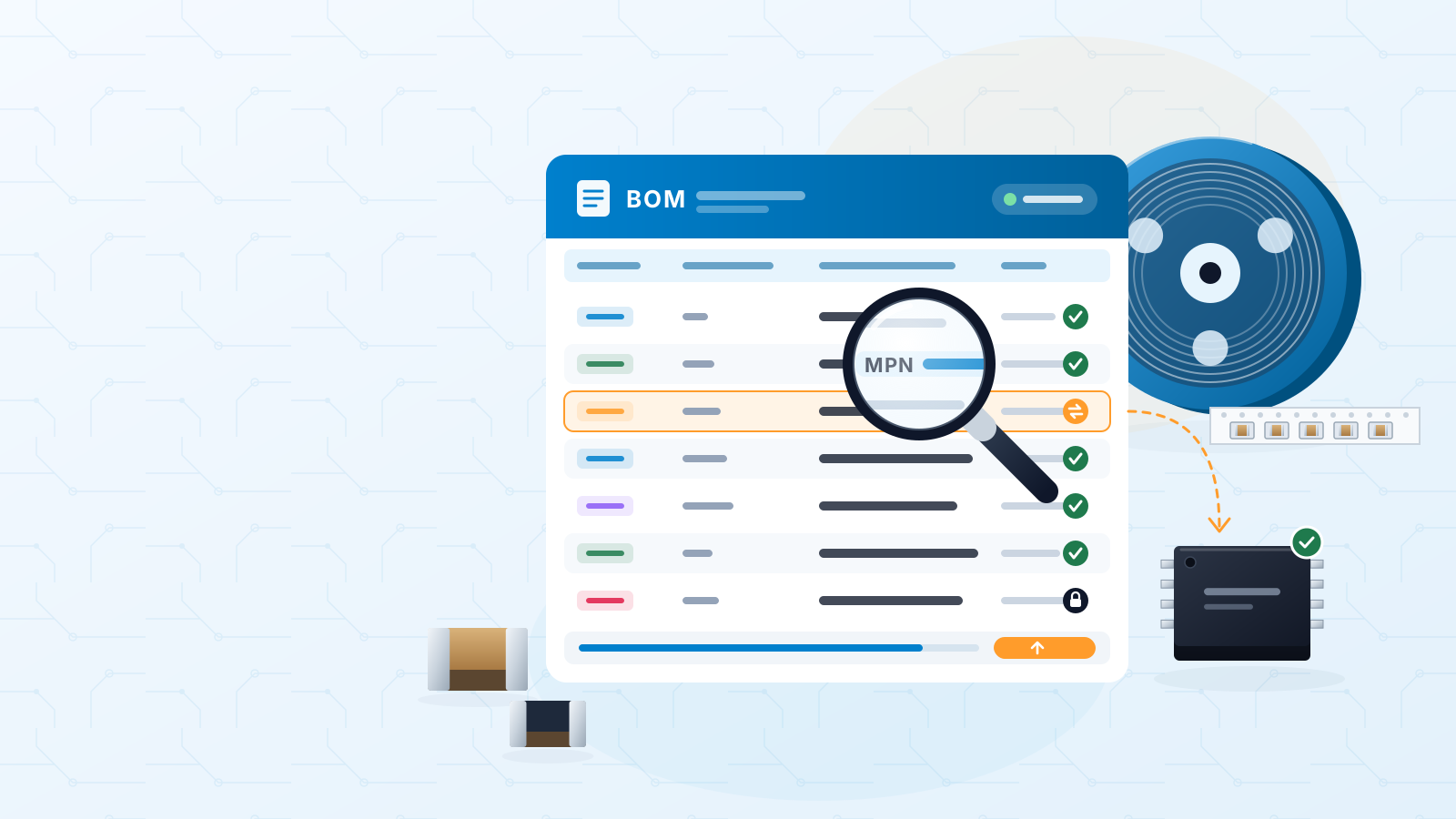
- List approved alternates on each BOM line once you have checked them, so a buyer can switch without asking you.
- Where layout space allows, draw a land pattern that can carry either of two packages, so a future swap needs no new board.
Lessons learned
Priya’s project shipped on time, and her team changed how they work. Every BOM now has a lifecycle column and an alternates column, and every single-source part has an owner who watches for PCNs. The real lesson: the best time to find an alternate is before you need one.
Ready to check your own BOM? Our BOM alternates and obsolescence guide covers lifecycle terms and what to check for each part type. You can search parts by part number, compare alternatives and upload a BOM in our electronic components store, and our component sourcing page explains how we buy parts for assembly.
#obsolescence#bom#alternate-parts#component-lifecycle#sourcing
Get an instant PCB quote