Reading your PCB quote: which options really change the price
Layers, size, finish and a few special options drive most of a PCB price. Here is what matters, what barely matters, and three easy ways to pay less.
Microplacer team · 15 November 2026 · 4 min read
 Ordering & Cost
An online PCB price looks like one number, but it is built from a handful of choices you make in the calculator. Knowing which choices move the price — and which barely matter — helps you get the board you need without paying for options you do not.
The options that move the price most
| Option | Why it changes the price |
|---|---|
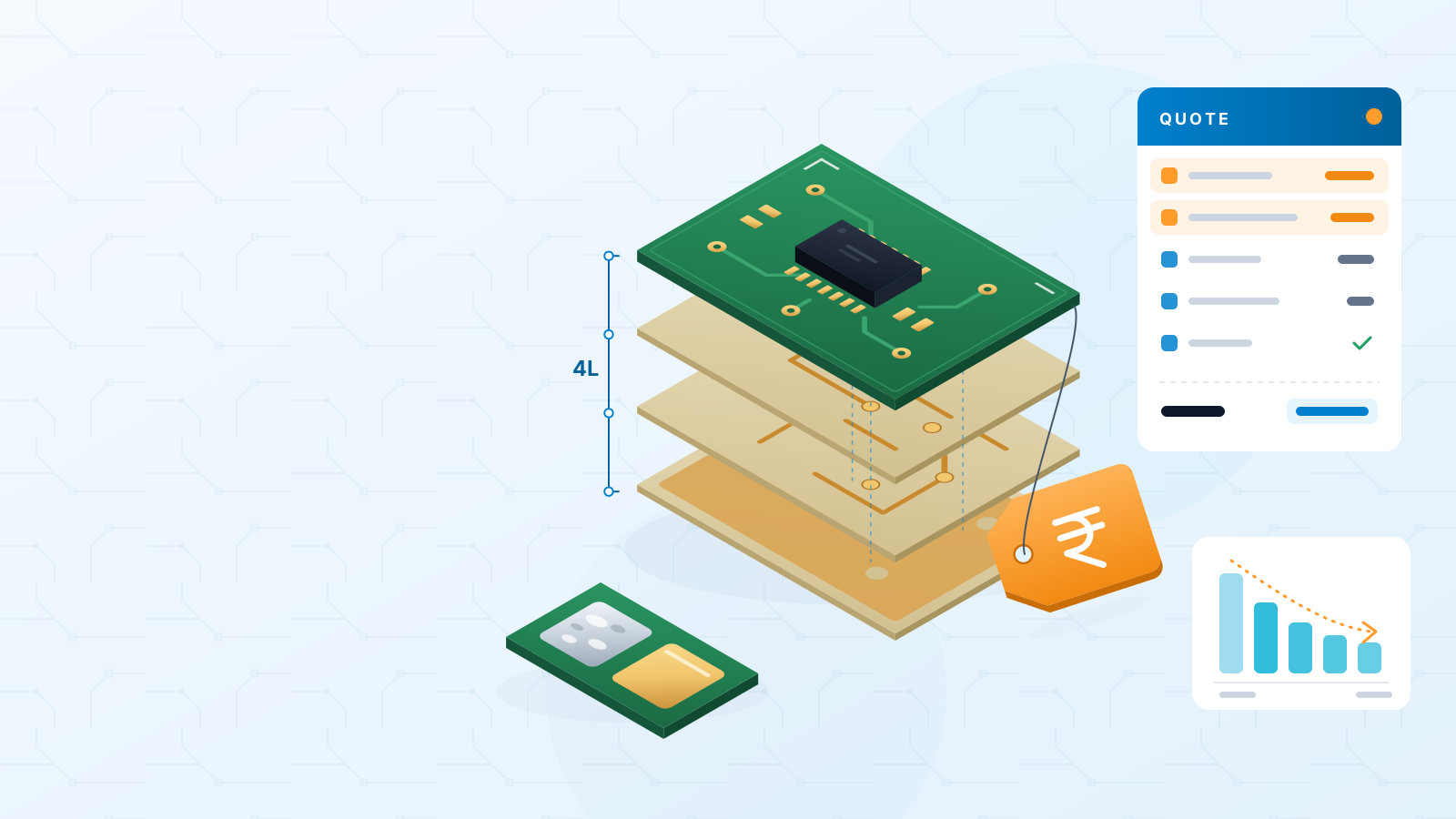
| Layer count | Every extra pair of copper layers adds imaging, lamination and testing steps. |
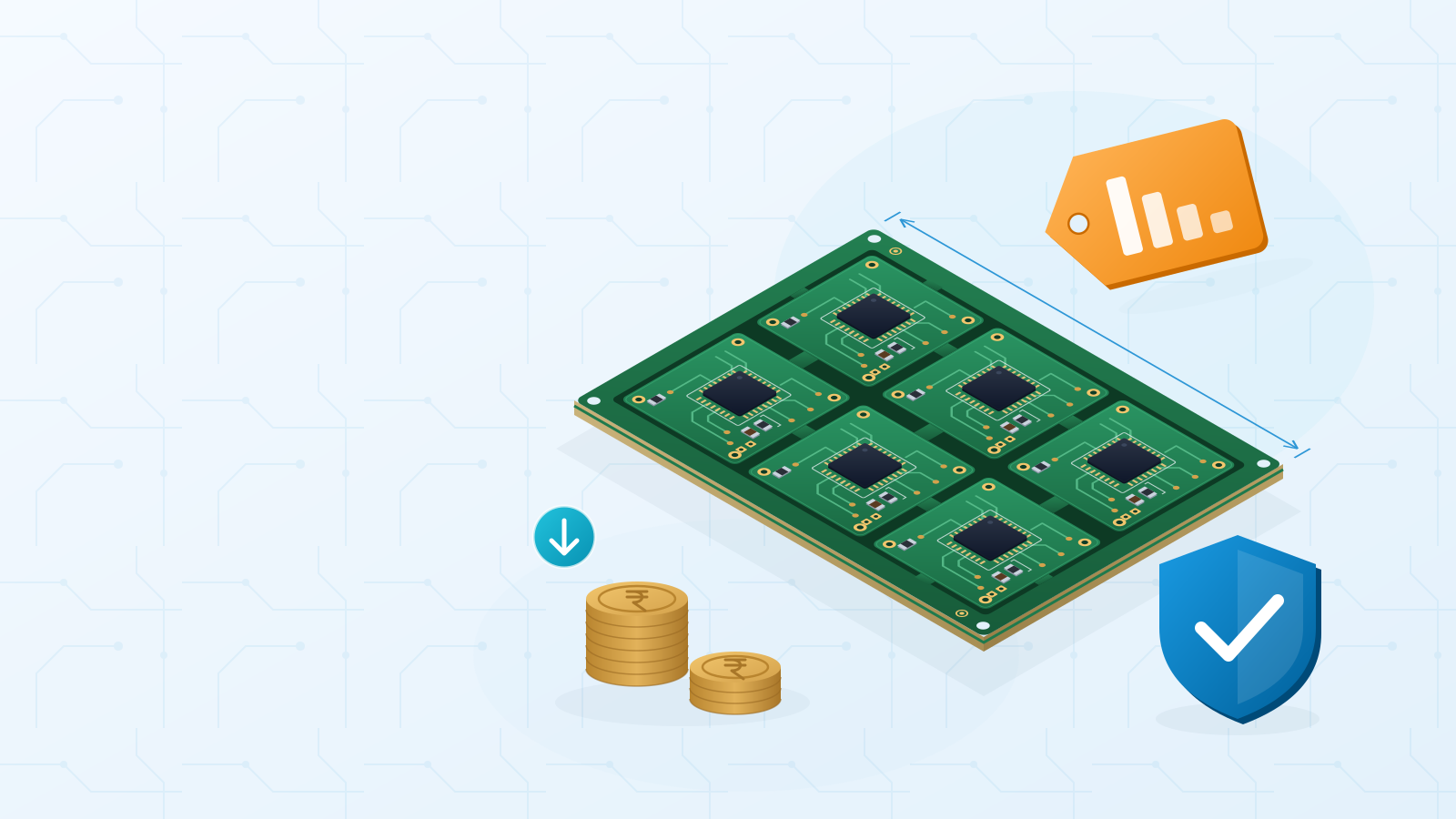
| Board size × quantity | You pay for panel area. Small boards share a panel; very large ones use it alone. |
| Surface finish | ENIG (immersion gold) costs more than HASL but gives flat pads for fine-pitch parts. |
| Copper weight | Heavier copper takes longer to plate and etch. |
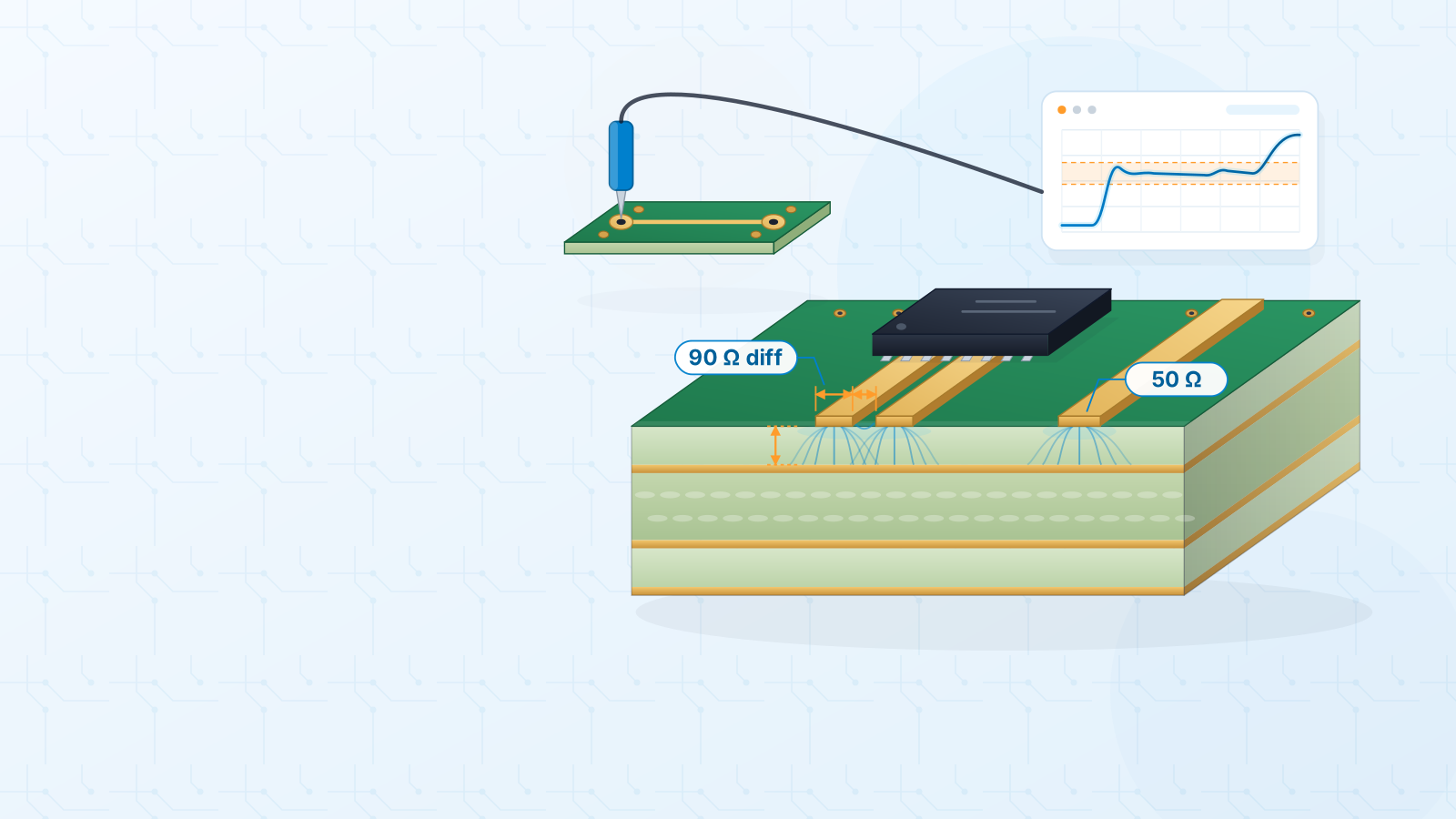
| Special options | Gold fingers, castellated holes, impedance control and small vias each add process steps. |
Options that usually cost little or nothing
- Solder mask colour on standard boards — green is the classic, but most colours are priced the same.
- Electrical testing — every board is 100% flying-probe tested at no extra charge.
- Shipping and GST — already included in the online price, so the total you see is the total you pay.
Three quick ways to lower the cost
- 1Order the quantity you will really use: price per board drops quickly between 5 and 50 boards.
- 2Keep the standard 1.6 mm thickness and 1 oz copper unless your design needs something else.
- 3Choose HASL for simple boards; save ENIG for fine-pitch and BGA parts.
Want the full picture? Our PCB cost factors guide goes option by option, and the ordering FAQ explains quotes, payment and delivery.
#pcb-price#online-quote#cost
Get an instant PCB quote